


Authored by Doctor JBA
Have you ever felt like no matter how little you eat, the scale just won’t move?
You’re not alone.
For many people — especially women — weight gain isn’t just about calories.
It’s about stress.
Stress Weight Is Real — And It’s Biological
When your body is under chronic stress, it activates the “fight or flight” response more often than it should.
This leads to elevated levels of cortisol, the body’s primary stress hormone.
Over time, high cortisol can:
Increase fat storage (especially around the belly)
Disrupt metabolism
Trigger cravings for sugar and carbohydrates
Suppress GLP-1, a key hormone that regulates appetite and blood sugar
👉 When GLP-1 is low, you feel:
Less satisfied after eating
More likely to overeat
More prone to weight gain
This is why stress-related weight gain often feels harder to control than normal weight gain.
🧠 What Your Face Can Reveal About Stress
Today, new technology is changing how we understand stress in the body.
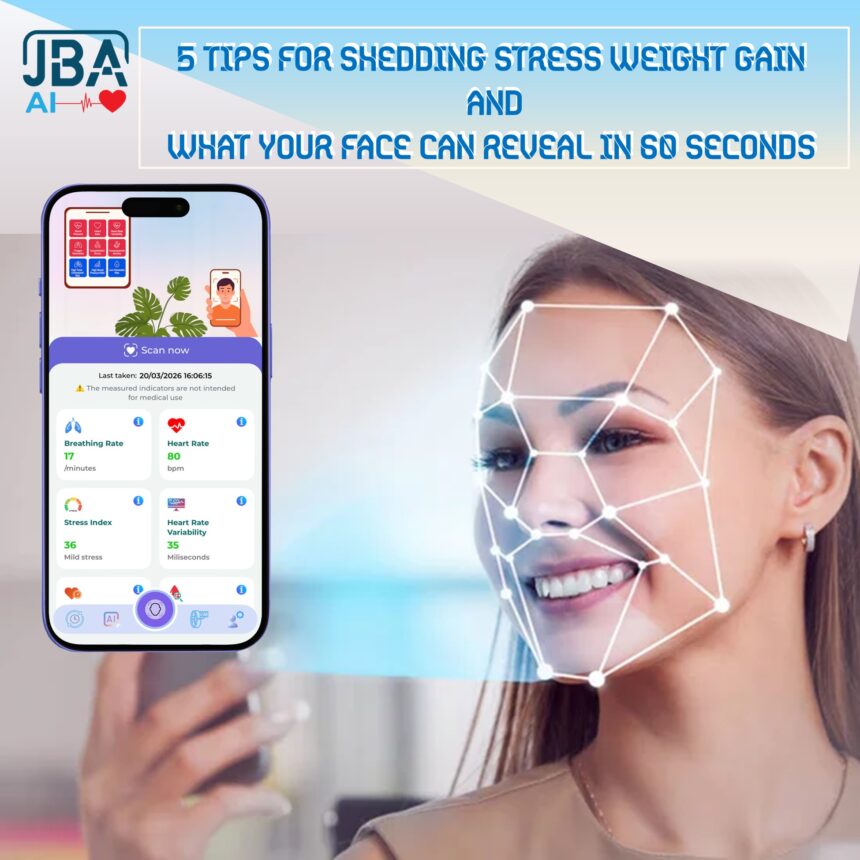
With JBA AI’s 60-second face scan, it is now possible to observe physiological signals related to:
Stress patterns
Circulation
Heart rate variability trends
Early biological imbalance
This is part of what we call Skin Intelligence — where the skin reflects internal biological conditions.
👉 Instead of guessing, you can begin to see how stress is affecting your body over time.
Understanding this is the first step toward correcting it.
5 Simple Ways to Reduce Stress Weight Gain
- Support Your Body With the Right Nutrients
Chronic stress drains your body’s resources.
When your body lacks the nutrients it needs, it shifts into “storage mode”, holding on to fat instead of burning it.
Key nutrients help support:
Hormonal balance
Energy metabolism
Tissue repair
This is where structural support becomes important.
Collagen-B helps support connective tissues, metabolic resilience, and overall body structure — which can be affected under prolonged stress conditions.
- Eat Earlier to Support Cortisol Rhythm
Cortisol follows a natural daily rhythm.
It is highest in the morning and gradually declines throughout the day.
Eating large meals late at night can disrupt this rhythm and keep cortisol elevated.
👉 A better approach:
Eat more earlier in the day
Keep dinner lighter
Support your natural circadian rhythm
- Understand GLP-1 and Appetite Control
Stress can suppress GLP-1, the hormone that helps regulate appetite and blood sugar.
When GLP-1 is low:
Cravings increase
Hunger signals become unstable
Weight loss becomes more difficult
While many people focus only on diet, understanding hormonal patterns is equally important.
With JBA AI scan, users can observe trends related to stress and physiological balance, helping them better understand how their body is responding.
- Reduce Sugar and Refined Carbohydrates
Sugar doesn’t just affect weight — it affects hormones.
High sugar intake can:
Spike blood sugar
Increase cortisol
Accelerate fat storage
It can also damage structural proteins in the body, including collagen.
Reducing sugar intake helps stabilize both metabolism and hormonal balance.
- Choose Stress-Reducing Movement
Not all exercise is beneficial under chronic stress.
High-intensity workouts may increase cortisol even further.
Instead, focus on:
Walking
Yoga
Light strength training
Stretching
👉 These help bring the body back into a “rest and balance” state, which supports fat metabolism.
Why Collagen Still Matters in Stress Weight
Most people don’t associate collagen with weight.
But collagen plays a key role in:
Muscle structure
Connective tissue
Metabolic support
Recovery under stress
When stress is high, the body’s ability to maintain structural integrity declines.
Supporting collagen levels helps the body stay more resilient, balanced, and responsive.
Collagen-B can be part of a daily routine to support this internal structure — especially during periods of stress.
A Smarter Way to Approach Weight Loss
Weight loss is not just about eating less.
It’s about understanding how your body is functioning.
With tools like JBA AI’s 60-second face scan, you can begin to observe how stress is affecting your physiology.
Combined with supportive daily habits — including proper nutrition and collagen support — this creates a more sustainable path to balance.
The Takeaway
If your weight feels “stuck,” the issue may not be your effort — it may be your stress.
When you understand your body, you can support it more effectively.
And sometimes, that understanding can begin with something as simple as
a 60-second scan of your face.
Start your 60-second JBA AI Scan today and discover your Stress & Skin Intelligence profile.